
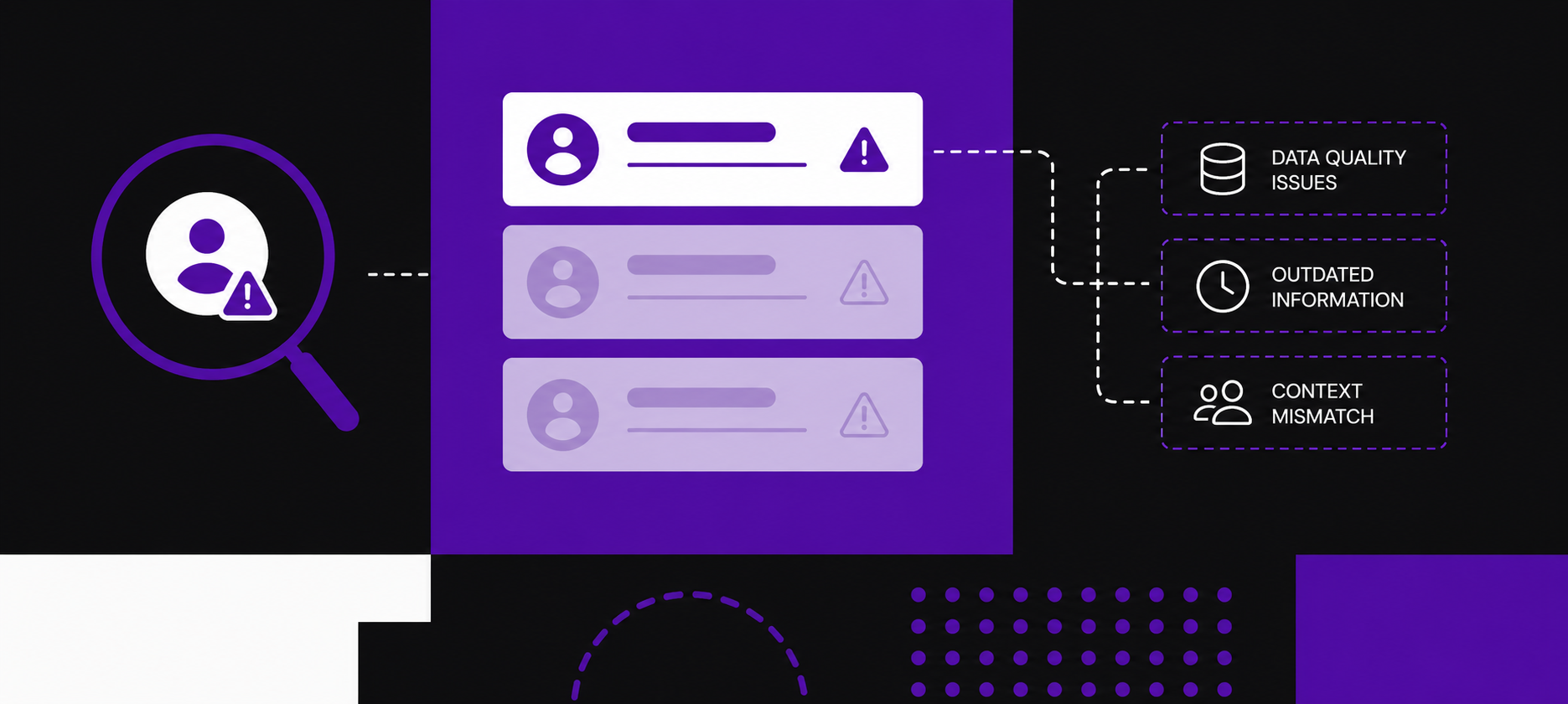
Credential intelligence has become one of the most valuable signals in cybersecurity because attackers increasingly gain access by using valid identities rather than exploiting technical vulnerabilities. A leaked password, session cookie, API key, or token can turn into a quiet path into SaaS platforms, cloud accounts, developer tools, customer portals, and internal systems.
The challenge is that credential exposure data often looks more certain than it really is. A record can be real and still create limited business risk. A password can appear in a breach dump after the user already changed it. A corporate email can appear in a consumer breach. A token can match the format of a real secret while belonging to a test environment. A session cookie can be dangerous for a short window and useless afterward.
False positives in credential intelligence usually come from missing context. The record may exist, but the system still needs to answer a harder question: can this exposed identity help an attacker reach something important today?
The Difference Between Exposed and Exploitable
A credential alert should separate exposure from exploitability. Exposure means the credential, token, or identity artifact appeared in an external source. Exploitability means an attacker can still use it to access a system, bypass a control, or support an intrusion.
This distinction matters because breach data lives far longer than the credentials inside it. Old dumps are copied, merged, resold, re-uploaded, and promoted as fresh inventory. A password from an old breach may continue to trigger alerts each time it resurfaces, even after password rotation, account closure, or system migration. For security teams, the same historical record can look like a new incident.
A mature program tracks the first-seen date, last-seen date, source reliability, original breach timing, and recent criminal circulation. Freshness becomes a risk signal rather than a timestamp field. A credential first observed in a new infostealer log carries a different priority from a credential recycled from a decade-old combolist.
Corporate Emails Create a Misleading Signal
A company email address often makes an alert feel corporate, even when the exposed account belongs to a third-party or personal service. Employees use work emails to sign up for newsletters, webinars, forums, trials, communities, travel sites, developer tools, and consumer apps. When one of those services is breached, the record points back to the employer domain.
This creates a common trap. The alert looks like a company credential, while the breached system may sit outside the company’s control. The risk becomes real when the employee reused the password, stored company data in the service, authenticated through corporate SSO, or accessed business tools from the same infected browser profile.
The useful question is therefore broader than account ownership. The right question is whether the exposed identity connects to business access. Credential intelligence becomes more accurate when it classifies each record as workforce, contractor, third-party, personal account with corporate email, service account, or unknown.
Password Reuse Turns Weak Signals Into Real Risk
Some alerts look noisy because the original breached site appears irrelevant. Yet attackers care about reuse, not the original source. Credential stuffing works because people reuse passwords across systems, and attackers automate login attempts across SaaS products, email providers, VPNs, cloud services, and financial portals.
This is where credential intelligence needs a risk model rather than a true-or-false label. A reused password tied to a developer, finance leader, administrator, executive assistant, or customer support user can become an immediate business risk. A repeated exposure across multiple breaches also signals behavior, not just data leakage.
The most useful systems score identity exposure by likelihood of reuse, user sensitivity, application access, MFA strength, and recent authentication behavior. In that model, a consumer-site breach involving a privileged employee becomes a meaningful signal instead of background noise.
Infostealer Logs Changed the Problem
Traditional breach data centered on username-password pairs. Modern infostealer malware changed the shape of credential intelligence. Stealer logs can contain saved browser passwords, cookies, session tokens, autofill data, browser history, device metadata, screenshots, crypto wallets, and files.
This creates a more complex false-positive pattern. A password in the log may already be rotated, while a browser session from the same machine may still support account takeover. A cookie may expire quickly, while the device metadata may help attackers mimic the victim’s environment. A low-value personal login may appear beside access to customer portals, code repositories, cloud dashboards, or identity systems.
The insight is that a stealer log should be treated as an identity compromise event, not only a password exposure event. The real triage question is what the infected browser could access at the moment of theft. That requires correlation with managed devices, SSO activity, SaaS logs, session revocation, and privileged application usage.
Secrets Detection Adds Another Layer of Noise
Credential intelligence increasingly includes API keys, access tokens, private keys, cloud credentials, OAuth tokens, service principals, and other machine identities. These exposures can be severe because they often provide direct programmatic access. They also create many false positives because machines generate strings that look sensitive.
Secret scanners often rely on patterns, entropy, provider formats, and keywords. Those methods catch real issues, but they also match placeholders, examples, test keys, hashes, truncated values, encrypted strings, fake documentation values, and inactive credentials. Research on secret detection tools has shown that generic regular expressions and weak entropy handling can inflate false positives, especially across code and documentation repositories.
The best secret intelligence validates context. A serious alert should indicate the provider, environment, permission scope, creation context, repository or source, exposure freshness, and whether the key appears active through safe customer-side validation. A production cloud key with broad privileges deserves immediate response. A sample value in a public README deserves a different workflow.
Identity Ownership Is Messier Than It Looks
Credential intelligence often assumes that an email maps cleanly to a current employee. Real organizations operate with aliases, shared mailboxes, contractors, vendors, acquired domains, service accounts, subsidiaries, former employees, shadow IT tools, and dormant accounts. This identity sprawl creates many misleading alerts.
An exposed credential for a former employee may still matter if the account remains active in a SaaS tool. A contractor credential may matter more than an employee credential if the contractor has access to production systems. A shared mailbox may represent a workflow used by finance, sales, or customer operations. A service account may belong to an integration with broad permissions.
Accuracy improves when external exposure data connects to internal identity context. HR data, identity provider status, SSO assignments, SaaS inventories, offboarding records, privilege levels, and contractor directories turn a raw alert into a business-relevant finding.
Third-Party Access Is a Blind Spot
Many credential alerts get dismissed because the exposed identity belongs to a partner, agency, supplier, outsourced support team, or managed service provider. That dismissal can be dangerous. Third parties often hold access to customer data, admin dashboards, ticketing systems, production tools, billing platforms, marketing systems, and internal collaboration spaces.
The practical boundary is access, not employment. A contractor with access to a customer environment can create more risk than a full-time employee with limited permissions. A partner portal account can become a bridge into sensitive workflows. An agency login can expose campaign data, customer lists, invoices, or admin panels.
Credential intelligence should include third-party identity mapping as a first-class capability. The strongest programs maintain a live inventory of external users and connect exposed credentials to actual access rights.
Marketplaces Pollute the Data
Criminal marketplaces, Telegram channels, forums, and paste sites are messy data environments. Sellers have incentives to exaggerate freshness, volume, and exclusivity. Dumps often contain duplicates, stitched records, generated combinations, recycled breach data, public profile information, and low-quality filler.
A listing that claims to contain fresh corporate credentials may include old data repackaged with a new title. A dump may combine real emails with unrelated passwords. A seller may add recognizable domains to improve perceived value. This creates alerts that look urgent but rest on weak provenance.
Source reputation matters. Credential intelligence should score the source, seller history, corroborating metadata, overlap with known breaches, uniqueness, and evidence of active abuse. Provenance turns raw collection into intelligence.
Session Data Creates a Short Response Window
Session cookies and tokens carry high risk because they can sometimes help attackers bypass MFA. They also expire, rotate, or become invalid after logout, password reset, device changes, policy enforcement, or session revocation. This makes session exposure highly time sensitive.
A delayed alert can describe a real past risk with limited present exploitability. A fast alert can trigger valuable response actions such as revoking sessions, forcing reauthentication, checking suspicious sign-ins, and reviewing device activity.
For session-related credential intelligence, speed and automation matter more than dashboard visibility. The value comes from shrinking the window between theft, detection, and revocation.
Better Context Beats More Alerts
The main reason credential intelligence creates false positives is simple: raw records lack business context. A useful alert needs to combine external exposure with internal truth. That means identity status, privilege level, application access, MFA posture, session state, device ownership, source reliability, credential type, and exposure freshness.
This shifts the product category from breach monitoring to identity exposure management. The goal is to tell security teams what deserves action now, what should be watched, and what can move into lower-priority hygiene workflows.
The most useful credential intelligence systems answer three questions quickly. Is the exposed artifact real? Can it still support access? Does that access matter to the business?
False positives shrink when credential intelligence stops treating every leaked record as equal. The future belongs to systems that understand identity, access, timing, and attacker usability.


 Previous post